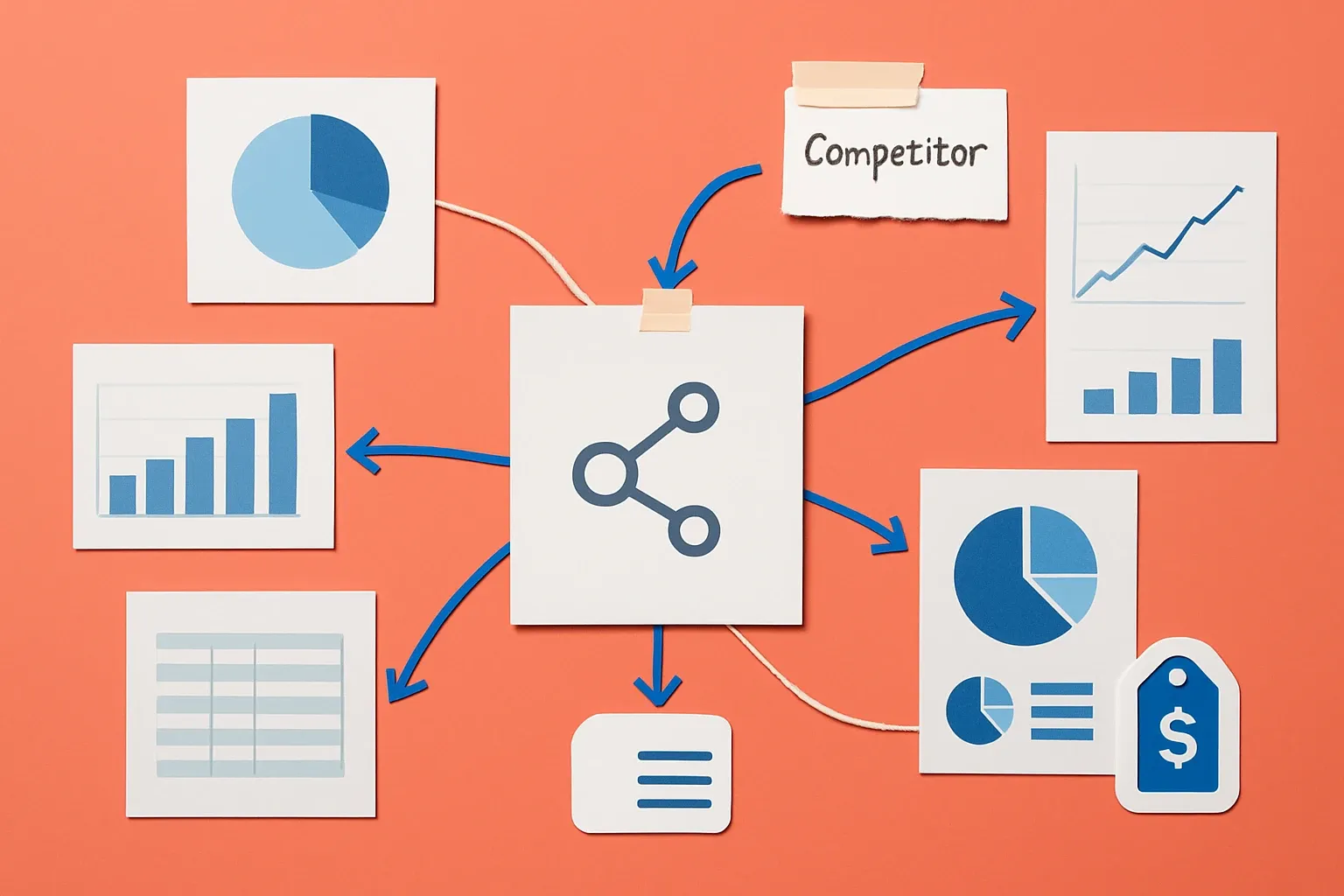


Using AI To Answer Technical Product Questions In A Nutshell
Your goal is fast, accurate, auditable answers. Think of a front door where sales or distributors ask plain language questions. The system searches your approved documents, assembles an answer, and shows the exact source pages with timestamps. A human reviewer clicks approve when needed, then the reply goes to the customer with a PDF attachment and a reference trail.
This is retrieval augmented generation. It works when your source documents are current, chunked for search, and tagged with product families, test methods, and regions. It fails when files are stale or unlabeled.
What “Seconds” Looks Like From Question To Quote
A rep types: “Need compressive strength data for Mix 5, 28 day, ASTM C39, Middle Atlantic projects.” The assistant finds the latest test report, confirms unit system and curing conditions, extracts the table, and cites the PDF page. It inserts an application note if conditions differ from the request. The response includes a one click packet with the TDS page, test report excerpt, and a cover sheet that lists methods and revision dates.
Prepare Your Data Once So Answers Stay Right
You do not need to boil the ocean. Start with the products and regions that drive 60 percent of requests.
Prioritize these sources:
- Technical data sheets and product specification guides
- Safety data sheets and hazard communication files
- Lab test reports tied to ASTM, ACI, or EN methods
- Certificates of compliance and mill certificates
- Declarations of Performance for CE marked lines and any regional approvals
For each file, store: product code, family, region, revision date, test method, units, and validity period. If a spec references DoP or CE marking, include the DoP number and link. EU products require a Declaration of Performance when covered by a harmonized standard or ETA, with CE marking based on that DoP (European Commission, 2025) (Circular Cities and Regions, 2025). National bodies confirm the DoP to CE link for construction products (OIB, 2025) (OIB, 2025).
A Minimal Architecture That Works Today
- A secure document store that holds the approved source of truth. Keep versioned PDFs and machine readable extracts.
- An embedding index for semantic search across documents and tables. Chunk by section headings, tables, and figure captions.
- A generation layer that assembles answers and inlines citations to source page locations. Include unit conversions with explicit assumptions.
- A lightweight approval workflow. Auto approve low risk lookups. Route complex cases to technical services.
- An export service that builds submittal packets with a branded cover sheet and a table of contents.
Governance, Safety, and Traceability Requirements
Keep the system defensible. Apply role based access so only authorized users can see draft reports or restricted chemistries. Use response templates that always include the document title, revision ID, and page. Align risk controls with the NIST AI Risk Management Framework outcomes for valid and reliable, explainable, and accountable AI use. NIST maintains the AI RMF and an AI Resource Center with testing and evaluation guidance (NIST, 2026) (NIST AIRC, 2026) and the core framework launch explains scope and intent (NIST, 2023) (NIST, 2023).
Keep SDS obligations in view. In the United States, if you become newly aware of significant hazard information you must update the SDS within three months and provide it with the first shipment after update (OSHA, 2024) (OSHA 1910.1200, 2024). In the EU, suppliers must provide SDS for hazardous substances or mixtures and update without delay when new information affects risk management (ECHA, 2025) (ECHA, 2025). Configure your assistant so any answer that cites an SDS pulls the latest approved revision and flags if a regional variant is required.
Implementation Timeline And Roles
Weeks 1 to 2: identify top product families, regions, and 50 high frequency questions. Gather the authoritative documents and define metadata. Build answer templates for TDS, test data, and compliance letters.
Weeks 3 to 4: ingest documents, create the index, and run dry runs with technical services. Calibrate unit handling, tolerances, and table extraction. Train reviewers on approve or edit flow.
Weeks 5 to 6: pilot with two sales districts and one distributor portal. Measure response time, edit rate, and citation accuracy. Expand document coverage based on incoming gaps.
Metrics That Matter To Sales And Quality
- Median time to first answer for a technical request
- Percentage of answers approved without edit on first pass
- Number of tickets deflected from technical services inbox
- Percentage of responses with at least two source citations
- Rate of SDS or DoP mismatches caught before sending
Tie these to revenue cycle time and customer satisfaction, not just usage counts.
Common Pitfalls And How To Avoid Them
Stale documents cause the model to sound confident and be wrong. Solve this with a nightly sync from your PLM or QMS and a rule that blocks citations to superseded files. Unlabeled tables create unit confusion. Solve this with explicit unit tags, method tags, and a unit conversion step that shows math in the answer.
Overbroad access risks exposing confidential formulations. Limit scopes by geography and product line. Use audit logs that record every document touched by each answer and keep them for your standard retention period.
A Practical First 30 Days Checklist
- Pick three product families and two regions that drive most bids
- Collect the latest TDS, SDS, test reports, and DoP where applicable
- Tag each file with product code, method, units, revision, and region
- Stand up retrieval, answer templates, and approval routing
- Run 100 historical requests through the system and compare outcomes
- Roll out to a small sales group with clear escalation paths
Where This Helps Beyond Sales Enablement
Quality control AI teams can use the same index to validate method alignment before releasing new TDS. Operations can attach process capability data so the assistant warns when a requested value exceeds current capability. Supply chain can add regional substitutions and lead times into the same answer packet for complete quotes.